Table Of Contents
Small Details That Make a Big Difference in Oak Design
In oak architecture, it’s often the smallest details that have the greatest impact. While the strength of the frame and the scale of the structure create an immediate impression, it’s the finer, quieter decisions that shape how a space feels over time.
From the way beams meet to how light touches the surface of the timber, these subtle elements bring depth, warmth, and character. In thoughtfully designed oak buildings, nothing is accidental. Every detail plays a role in creating a space that feels balanced, natural, and enduring.
The Precision of Craftsmanship
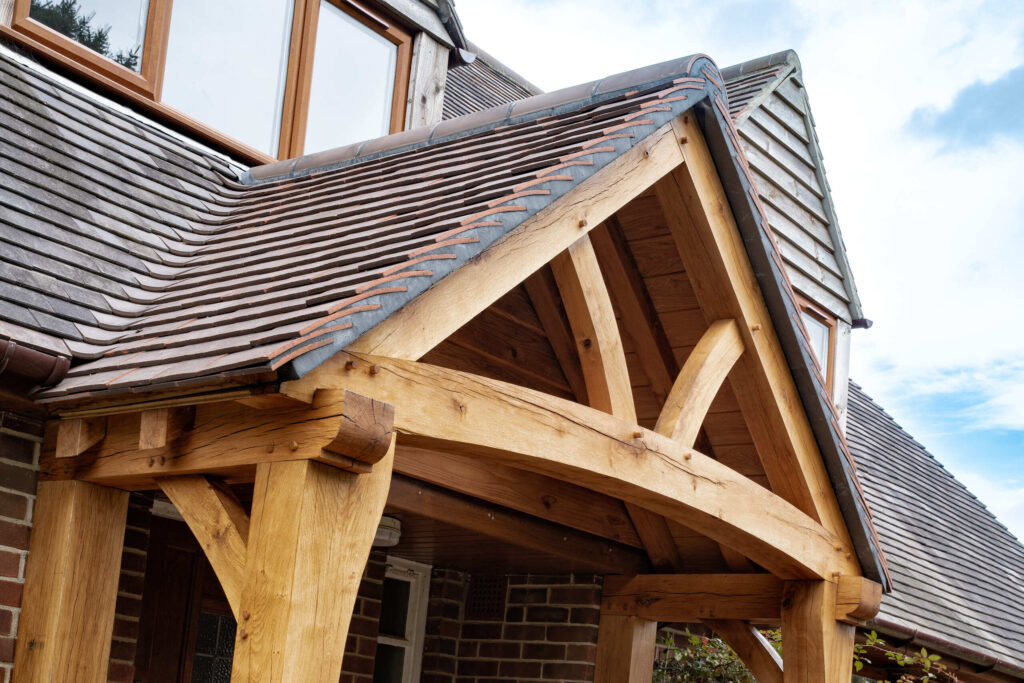
At the core of oak design is craftsmanship. Traditional mortise and tenon joints, secured with oak pegs, are carefully formed to create clean, seamless connections between each element of the frame. These joints are not just structural. They are part of the visual identity of the building.
The precision of these details ensures the frame sits comfortably together, while allowing for the natural movement of green oak as it matures. Over time, the structure settles and strengthens, with each joint becoming tighter and more refined. It’s a quiet process, but one that adds to the lasting integrity and beauty of the building.
Subtle Finishes and Softened Edges
The way oak is finished can transform how it is experienced. Chamfered edges, gentle curves, and hand-worked surfaces soften the strength of the timber, introducing a sense of refinement and approachability.
These details influence how light interacts with the frame, catching edges and creating soft highlights that shift throughout the day. Rather than feeling heavy or rigid, the oak takes on a lighter, more tactile quality, inviting both visually and physically.
Natural Character and Texture
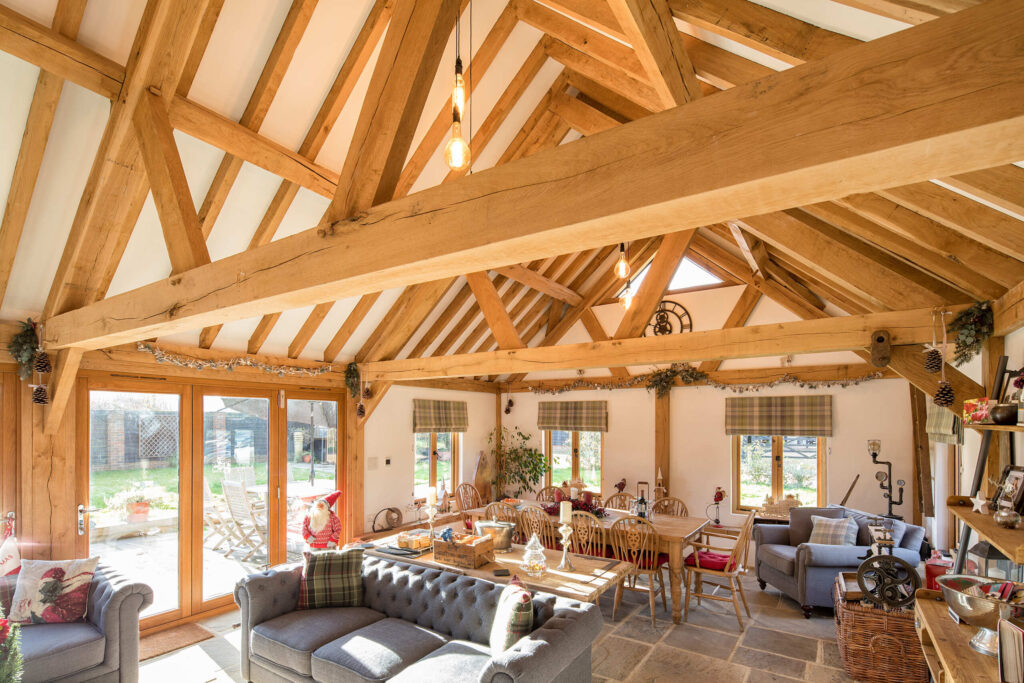
No two pieces of oak are ever the same. Grain patterns, knots, and organic variations give each beam its own identity, adding richness and authenticity to the structure. These natural features are not imperfections, but essential elements of the design.
As the oak dries and matures, it develops subtle surface splits and tonal changes that enhance its depth and character. These evolving details ensure the building continues to change over time, becoming more expressive and more connected to its natural origins.
Thoughtful Connections and Flow
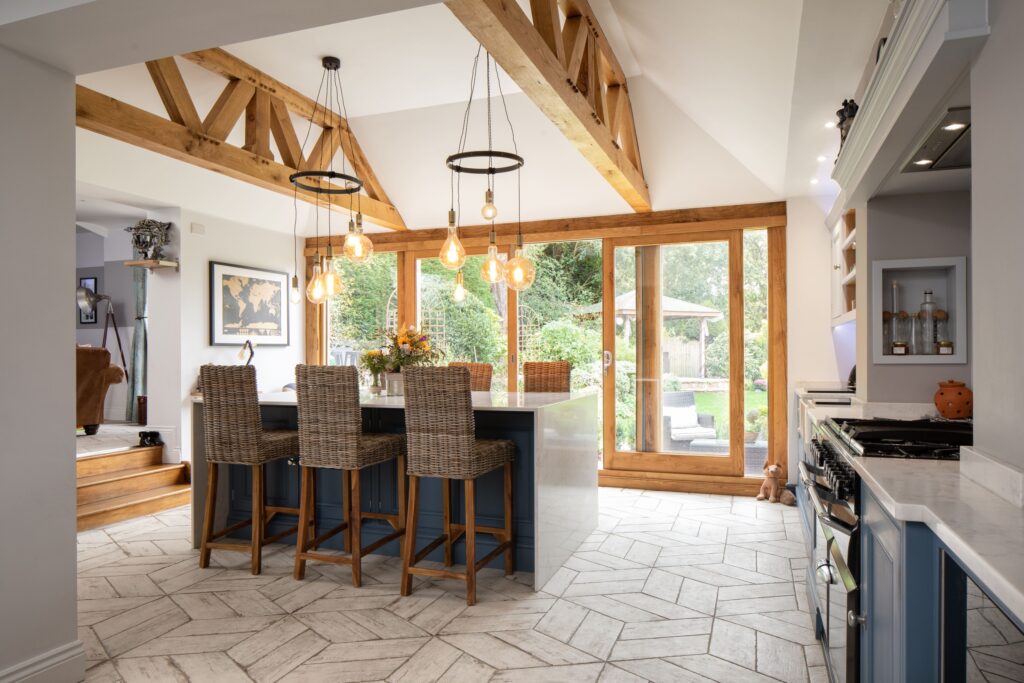
Small details also shape how a space is experienced as a whole. The alignment of beams, the transition between interior and exterior spaces, and the relationship between oak and materials like glass all contribute to a sense of flow.
When carefully considered, these elements create a seamless connection throughout the building. Spaces feel intuitive and cohesive, with each detail supporting the overall design. It is this sense of continuity that allows oak structures to feel both grounded and effortlessly liveable.